
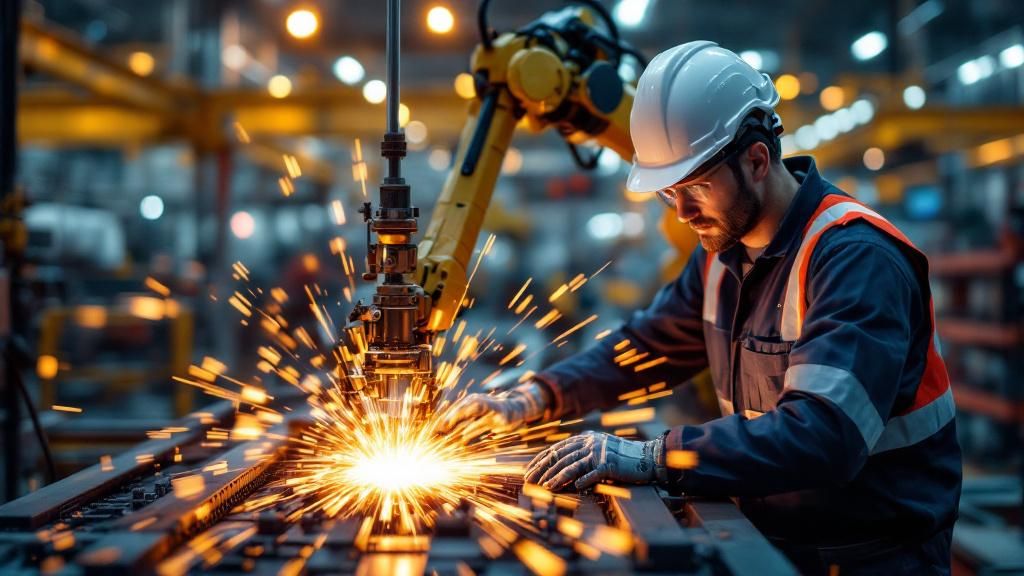
The UK manufacturing industry is undergoing an significant shift as manufacturing executives allocate record-breaking investments in cutting-edge automation technology and broad-based employee development schemes. This strategic shift underscores manufacturers’ determination to improve output, maintain their competitive edge, and secure their economic future. Our investigation reveals the substantial financial commitments fuelling this industrial revolution, explores the cutting-edge solutions reshaping factory floors, and evaluates how companies are equipping their staff for future requirements. Discover what this capital influx means for British manufacturing’s trajectory.
Growth Surge in Automated Systems
The UK manufacturing sector has experienced an extraordinary financial commitment towards automation solutions, with capital attaining unprecedented levels in recent times. Major manufacturers across the automotive, aerospace, and electronics industries are allocating substantial capital towards automation robots, AI technology, and cutting-edge production methods. This spending increase indicates industry confidence in automation’s capacity to boost operational performance, lower manufacturing expenses, and raise quality benchmarks. The extent of this investment emphasises producers’ understanding that technological progress is crucial for sustaining competitive edge in an ever more globalised marketplace.
Industry specialists ascribe this investment momentum to several converging factors, such as post-pandemic supply chain reassessment, escalating wage expenses, and the pressing need for enhanced production flexibility. Companies are prioritising automation solutions that provide adaptability and growth capacity, enabling rapid adaptation to fluctuating market demands. Investment figures show that manufacturers are going well beyond simply modernising manual operations but radically transforming operational frameworks. This strategic approach secures that British manufacturing continues at the forefront of manufacturing advancement, placing the sector for sustainable growth and improved durability against forthcoming financial volatility.
Strategic Workforce Development Schemes
Recognising that technological advancement alone cannot drive success, UK manufacturers are allocating considerable funds in comprehensive workforce development programmes. These initiatives demonstrate a significant change in how the industry invests in human capital. By pairing automation deployment with rigorous upskilling initiatives, manufacturers are ensuring their workforce can successfully run, service, and enhance new technologies. This holistic approach tackles capability shortfalls whilst building employee confidence and engagement in an rapidly mechanised environment.
Skills Training Programmes
Leading producers have created custom training centres and structured apprenticeships created to furnish workers with critical digital and technical skills. These schemes include robotics operation, analytical data work, cyber security protection, and advanced programming languages. Resources allocated to instructor-led and online learning platforms provides availability throughout all staff categories. Companies are partnering with training providers to offer credentials recognised across the industry, boosting career development potential and employee retention rates considerably.
The financial outlay to professional training extends beyond first-stage induction, with organisations deploying ongoing capability enhancement initiatives. Workers receive regular upskilling options to adapt to evolving technological landscapes and emerging industry benchmarks. Many organisations make available education funding, mentoring schemes, and educational sabbaticals for further education. This ongoing commitment demonstrates companies’ commitment to developing sustained career pathways and cultivating a culture of ongoing education within their companies.
Working relationship with Academic Organisations
UK producers are forging strategic partnerships with universities and further education colleges to synchronise course design with sector needs. These collaborations ensure graduates possess hands-on abilities directly relevant to contemporary production settings. Joint ventures include curriculum design, visiting lectures, laboratory access, and resource supply. By working closely with educational institutions, manufacturers influence the pipeline of skilled workers joining the sector, addressing anticipated skills shortages in advance.
Additionally, manufacturers fund research projects and innovation centres within higher education institutions, encouraging knowledge exchange and technological development. Combined-degree programmes and work placements offer students with invaluable real-world experience whilst giving companies priority access to new talent. These working relationships consolidate the UK’s position as a worldwide manufacturing centre, guaranteeing sustained competitiveness and positioning Britain as an appealing destination for cutting-edge manufacturing investment and skilled workforce development.
Economic Impact and Prospects Ahead
The unprecedented funding for automation and workforce training is forecast to create significant financial gains across the UK manufacturing landscape. Sector specialists expect output increases of up to 25% over the next three years, translating to greater output and improved competitiveness in global markets. These advancements are expected to establish approximately 15,000 new skilled manufacturing positions whilst reinforcing Britain’s standing as a tech-focused industrial centre. The cascading impact of this investment will potentially encourage development throughout distribution networks and supporting sectors.
Long-term prospects for UK manufacturing appear decidedly encouraging as businesses position themselves at the leading edge of Industry 4.0 adoption. Companies deploying automation today are setting themselves up to seize fresh commercial prospects and adapt rapidly to changing customer needs. The integration of artificial intelligence, robotics, and cutting-edge analytics promises to release creative capacity historically restricted by labour availability and operational limitations. Forward-thinking manufacturers recognise that enduring market position depends upon ongoing technological development and employee skill enhancement.
Looking forward, the momentum generated by existing investment patterns indicates a fundamental reshaping of UK manufacturing’s economic role. State backing via skills investment and enterprise incentives will potentially increase uptake among smaller enterprises. As automation matures and workforce skills grow, UK manufacturers are well-positioned to reclaim market share from international competitors. This transformation constitutes not just industrial modernization but a strategic repositioning of manufacturing as a cornerstone of the UK’s future economic prosperity and technological advancement.
